
Palm oil is an edible vegetable oil that comes from the fruit of oil palm trees. It is used extensively because it is versatile and economical to grow. It does not require as many fertilisers and pesticides as other oil crops and every part of the oil palm can be used – fruit, leaves, trunk and byproducts.
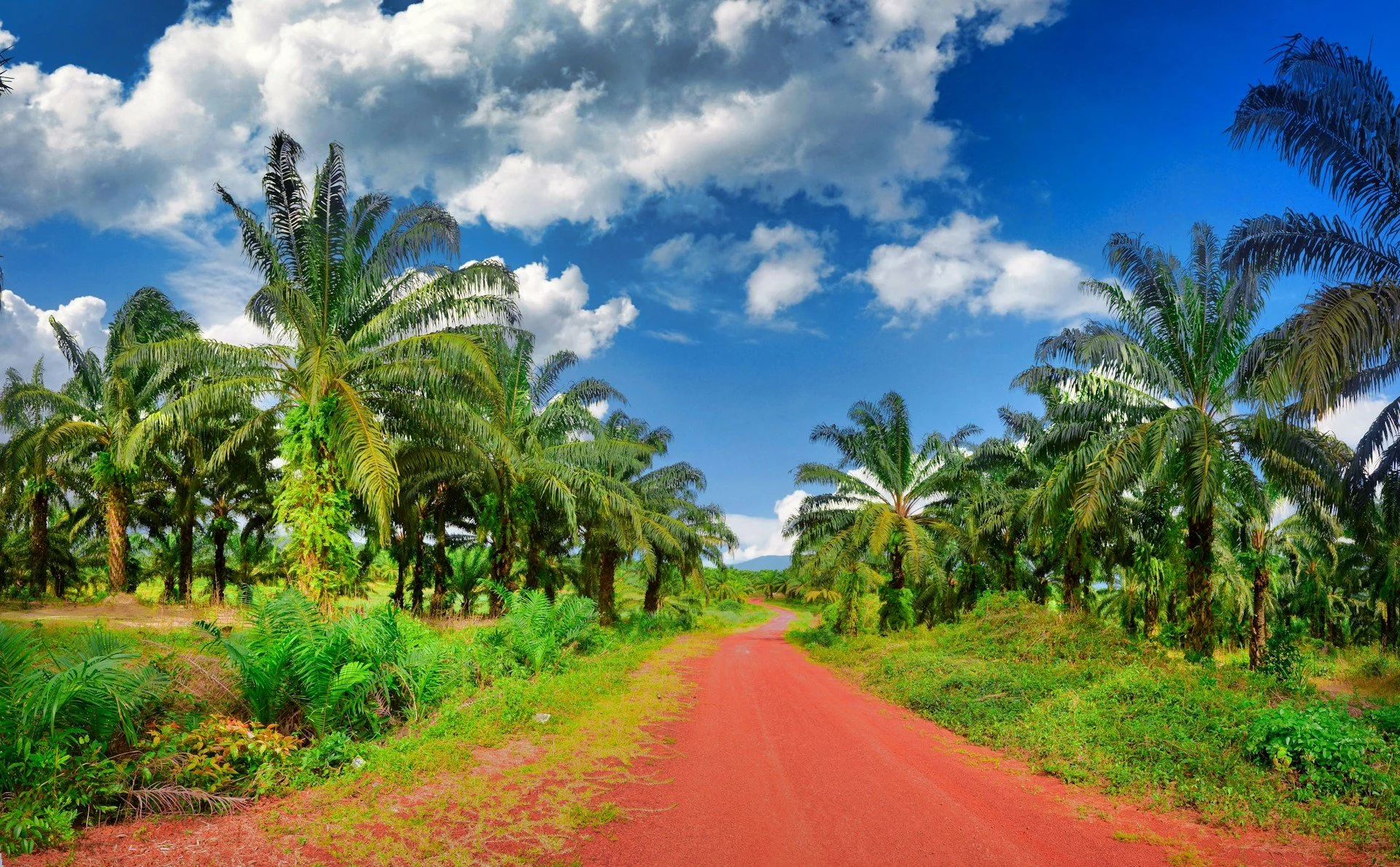
The trees are native to Africa but were brought to South-East Asia just over 100 years ago as an ornamental tree crop. Indonesia and Malaysia now make up over 85% of global supply, with over 40 other countries producing the remaining 15%.
Many sources such as the WWF and Our World in Data state that oil palm trees produce significantly more oil per hectare than any other equivalent vegetable oil crop - over a third of the world’s oil but uses less than a tenth of cropland devoted to oil production. To get the same quantity of alternative oils like soybean, coconut, or sunflower oil you would need between 4 and 10 times more land. This would shift production problems to other parts of the world and threaten other habitats, species and communities.
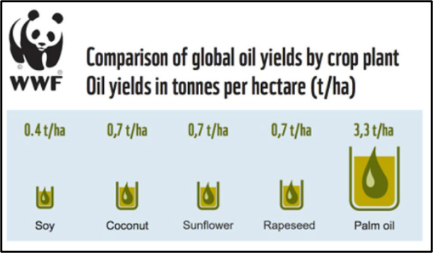
Source: WWF - 8 Things to know about palm oil
There are many properties that make palm oil useful:
Semi-solid at room temperature so is spreadable
Acts as a natural preservative in processed foods
Resistant to oxidation therefore it gives products a longer shelf life
Is odourless and colourless making it the perfect ingredient for edible as well as non-edible products
Used in animal feed and as a biofuel in many parts of the world (not in the UK)
Low price, high cost
Palm oil’s low price is partly due to its high yield but also because, as with other mass-produced crops, the environmental and social costs go unaccounted for.
Growing palm oil trees is a major driver of deforestation of the world’s most biodiverse forests. Production at an uncontrollable rate is wiping out the habitat of already endangered species such as Orangutan, pygmy elephants and Sumatran rhino. The continued deforestation is contributing millions of tonnes of greenhouse gases to the atmosphere and issues of child labour and exploitation of workers are also prevalent.
What can we do as consumers?
The WWF advises that “the best thing we can do is support sustainable palm oil and avoid boycotts, since we know substitutions with other vegetable oils can lead to even further environmental and social harm”.
The Roundtable on Sustainable Palm Oil (RSPO), founded in 2004, is working to transform the palm oil industry to make it sustainable. By following RSPO standards, growers help to protect the environment and the local communities who depend on the crop for their livelihoods. However, the RSPO has faced widespread criticism from organisations such as Greenpeace, Friends of the Earth and Amnesty International, that it enables greenwashing because it is slow to penalise members that fail to meet its standards.
India and China each consume more palm oil than the EU, with production projected to increase significantly. If countries with more developed consumer campaigns turn away from palm oil altogether, the most damaging forms of unsustainable production may become even more widespread.
Ethical Consumer is a UK based independent, not-for-profit co-operative. They believe avoiding palm oil or choosing products with top sustainability certifications are reasonable responses to complex issues. Their shopping guides and palm oil ratings could help you decide to ‘buy or boycott’ products containing palm oil.
Further useful and interesting information:
https://ourworldindata.org/palm-oil
https://www.agrifarming.in/oil-palm-cultivation
https://palmoilpalm.com/types-of-palm-oil-trees
https://www.britannica.com/plant/oil-palm
Youtube.com Ethical Consumer - To buy or boycott