
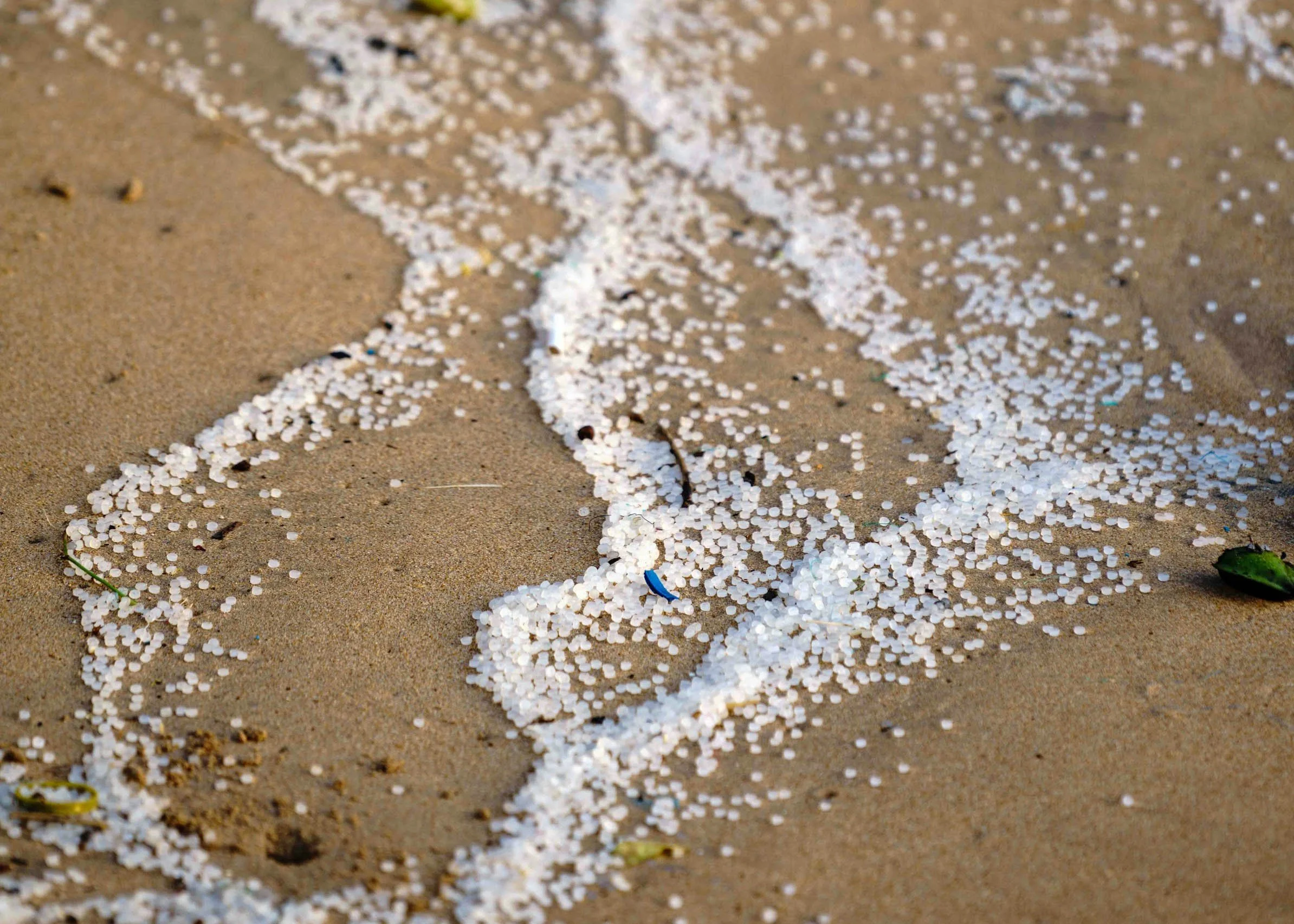
While plastic has added much value to our lives, when plastic waste is mis-managed it becomes an environmental pollutant and can break down to form microplastics. There are several definitions of microplastics, with a widely used definition as “any fragment of plastic between 1 nanometre and 5 millimetres wide”.
The United Nations Environment Programme (UNEP) lists two main sources of microplastics:
Primary microplastics which are made to be small, e.g. microbeads intentionally added to personal care products
Secondary microplastics which come from the disintegration of larger plastic products
The second category is far larger. Tyre dust, synthetic clothing fibres, plastic packaging, marine paint and agricultural films all contribute millions of tonnes of microplastic particles to the environment each year. Once in the environment they can be dispersed over large distances and are nearly impossible to remove.
Microplastics are already found in nearly all ecosystems, from deep sea sediments to polar ice, and throughout the human body. Leakages occur across the entire life cycle of plastics, from production and everyday use to disposal and recycling.
Plastic production has increased sharply over the last 70 years. Global production in 1950 was two million tonnes, by 2019 it was over 450 million tonnes. In the last 2 decades global plastic production has doubled.
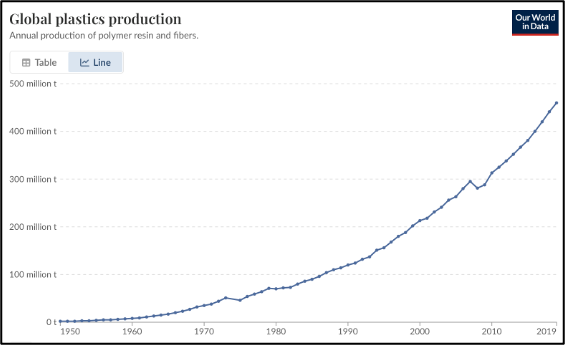
Source: Our World in Data
Once in the environment, microplastics can create new microbial habitats on their surfaces known as the Plastisphere, and in the ocean they can travel long distances due to their persistence. Although microplastic pollution has historically been associated with rivers and oceans, they are known to act like a “Trojan horse” delivering pollutants, pesticides and bacteria through soil. These surfaces form a hotspot for interactions between plastics, microbes and agrochemicals, and can have an impact on earthworms and soil organisms by disrupting critical processes such as nutrient cycles.
What is being done about microplastic pollution in the UK?
The All Party Parliamentary Group on Microplastics (APPG), in collaboration with the Global Plastics Policy Centre at the University of Portsmouth and the Women’s Institute, have launched a second report - Tackling Microplastic Pollution in the UK. This report provides an assessment on the scale of microplastic pollution in the UK and sets out a practical package of actions that could be implemented over the next five years.
The report concludes that there is rapidly growing evidence that people are at risk of adverse health outcomes due to being continuously exposed to microplastics through food, drinking water and air. Economic and adverse health implications of microplastic pollution are increasingly recognised, with emerging evidence of economic impacts across fisheries, agriculture and public health sectors, alongside growing costs associated with pollution management and environmental degradation. Although precise safe exposure thresholds remain uncertain, the scale, persistence and widespread nature of exposure indicate that delaying action increases the risk of cumulative and potentially irreversible impacts.
Despite this, the UK lacks a coherent policy response for microplastics. There are no legally defined reduction targets, no regulatory limits across key pathways such as wastewater, air or soils, and no coordinated framework to guide action. This creates uncertainty for regulators and industry, limits the ability to prioritise and fund interventions, and risks increasing long-term environmental, health and economic costs.
As with other environmental issues, early intervention is likely to be significantly more cost effective than managing cumulative microplastic pollution and its downstream impacts.
Let’s hope our MPs read and act on the report.
Main Sources:
https://ourworldindata.org/plastic-pollution
https://www.theguardian.com/environment/2026/sep/16/soil-microplastics-trojan-horse-toxins
https://www.unep.org/en/news-and-stories/story/everything-you-should-know-about-microplastics
https://www.thewi.org.uk/campaigns/news-and-events/the-appg-on-microplastics-second-report
Further information:
https://minagris.eu/publications/
https://scienceinsights.org/where-do-microplastics-come-from-biggest-sources/
https://www.sciencedirect.com/science/article/pii/S004896972305550X?via%3Dihub
Top 10 Ways to Remove Microplastics