
Less - Patrick Grant
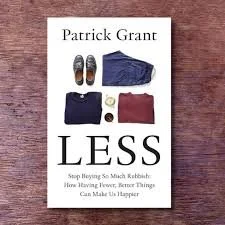
The author Patrick Grant asks us to think about our clothing purchases, both how they affect the planet and communities.
Part history book, telling the stories of manufacturing in Britain as a source of pride and social cohesion and part an encouragement to spend more on your clothes and then wear them for the long term. Terry Pratchett is quoted to give us the ‘Vimes theory of boots’ - The rich spend proper money on well made boots that last forever and are bought once. The poor spend a small amount of money on boots that wear out quickly and need replacing. Over a long period the poor end up spending more and have wet feet. The same theory can be used for coats, jumpers etc. Buy well and buy less.
Patrick Grant tells us of his own history, working in Saville Row, supporting factories in the traditional cloth / clothing areas of Britain, from Harris to the Midlands to the valleys of Wales, and starting Community Clothing. These areas had craftsmen, working to create a quality product with pride, and spending their wages in the local area and as a result supporting their communities. The outsourcing of manufacturing overseas knocked the heart and pride out of these areas, just to save money for the seller and as a result the purchaser. Next time you are in any shop from the supermarket to M&S, Fat Face, Sea Salt etc read the labels and it is the same - your woollen jumper comes from Cambodia - not an area renowned for its sheep. And to make it cheaply they will use less materials - feel the sweatshirts in M&S and compare them to the sweatshirts you used to buy. That said, we have become used to spending less and I baulked at spending that much on the sweatshirt I liked (and would probably live in!)
We discussed the rise of Vinted and buying from charity shops. We are not buying new (which is good) but someone is (which is less good), and buying more (which is not solving the problem). The idea that you can sell it on to another encourages more purchases and even more of a fast turn around - fast fashion is still big business.
To quote - ‘our clothes may be cheap but have a heavy cost’. We need to think about if we need something, does it have side effects, what is the bigger picture, can we spend more and enjoy a better product? Should I spend more to have dry feet for longer?
I found this book inspiring and thought provoking. My family probably got fed up with me telling them about it, and putting up with me reading all the labels in the shops. But they were very nice about getting socks for Christmas.
Elizabeth Eveleigh