
The Lie of the Land - Guy Shrubsole
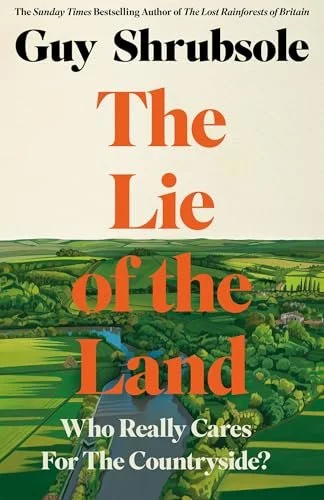
Guy Shrubsole’s book was a shocking call to arms. 1% of the UK population is said to own 50% of the land, often in the shape of large estates. These estates may be run as farms with tenant farmers, or as huge grouse moorlands for the benefit of a few wealthy ‘sportsmen’ and little else.
By telling their story and careful completion of paperwork the estates receive large government subsidies. The use of the phrase ‘stewardship’ is regularly used, but with little evidence of benefit. There is a lack of transparency over what is being achieved , and no real need to prove any success, but our taxes are paying for it.
The author is firmly against the shooting estates. The sheer scale of the pheasant releases and slaughter far outweighs the number of birds sold for food, resulting in mass burials and skewing of the ecosystems in which they are raised. Grouse moorlands are kept as heather monocultures, with regular burnings to maintain the prime habitat for grouse and little else. Peat is lost and flooding affects lowland areas for the benefit of very few people.
Examples of community land buy-outs are shown as a possible future solution. Scotland has laws that mean that the local people have to be offered the chance to buy their local land, before it is offered on the open market and with access to possible funding sources. There are local examples of community landownership and this should be encouraged. An alternative would be to create a Public Nature Estate, or a funding stream to allow land to be purchased by charities such as the Wildlife Trusts, RSPB or National Trust.
The government pays approx £9.2 billion to landowners in subsidies, of which £1.8 billion is in the form of Environmental Land Management Schemes. We, the UK residents, tax payers and self-professed lovers of nature, deserve to see our land cared for and nature restored, but without the landowners needing to evidence this it is difficult to be positive about change.
The author was against the power of the National Farmers Union and their lobbyists, and encouraged support for Wild Justice and the possibilities of people-power by our own lobbying of our MPs
This book was a call to arms, and the need to change the status quo. It is a well written and detailed text. It demanded further personal research and then action. Community land ownership is possible, public / government land could be expanded or the conservation charities could manage more areas. We need to be aware, ask questions and demand better.
Elizabeth Eveleigh